
Starting is the Hardest Part — Part 2
Read Part 1 first.
My first sprint triathlon changed my life.
I had found a new passion, and I wish everyone could experience that kind of spark with a hobby at least once.
I was 26 when I tried triathlon for the first time.
As someone who already loved long-distance running, I knew almost immediately what the ultimate goal was:
Ironman.
I got to work, eager not to lose momentum.
Then life started throwing curveballs.
Curveball One: He popped the question.
I said yes!
We eagerly went into wedding-planning mode. Camden was 36 at the time, and I had always wanted a short engagement. We got married after a three month engagement on our one-year anniversary.
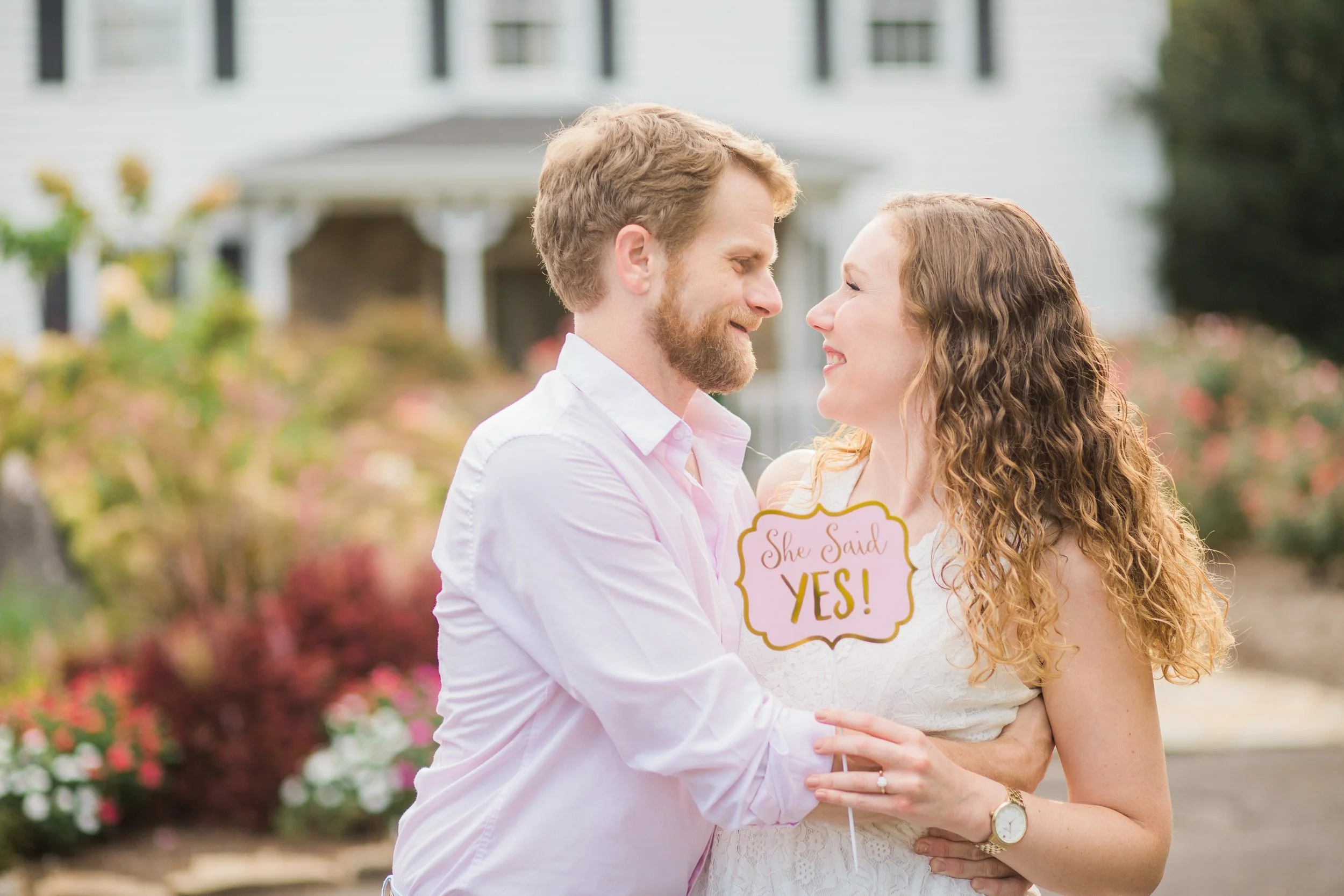
Special Thanks to Danielle Evans Photography at Dara’s Garden in Knoxville, TN
Curveball Two: The first year of marriage.
Camden developed a health issue, along with some other drama in our lives during that season. We found working through challenges together strengthened our relationship and brought us closer together.
It took about a year for life to simmer down again.
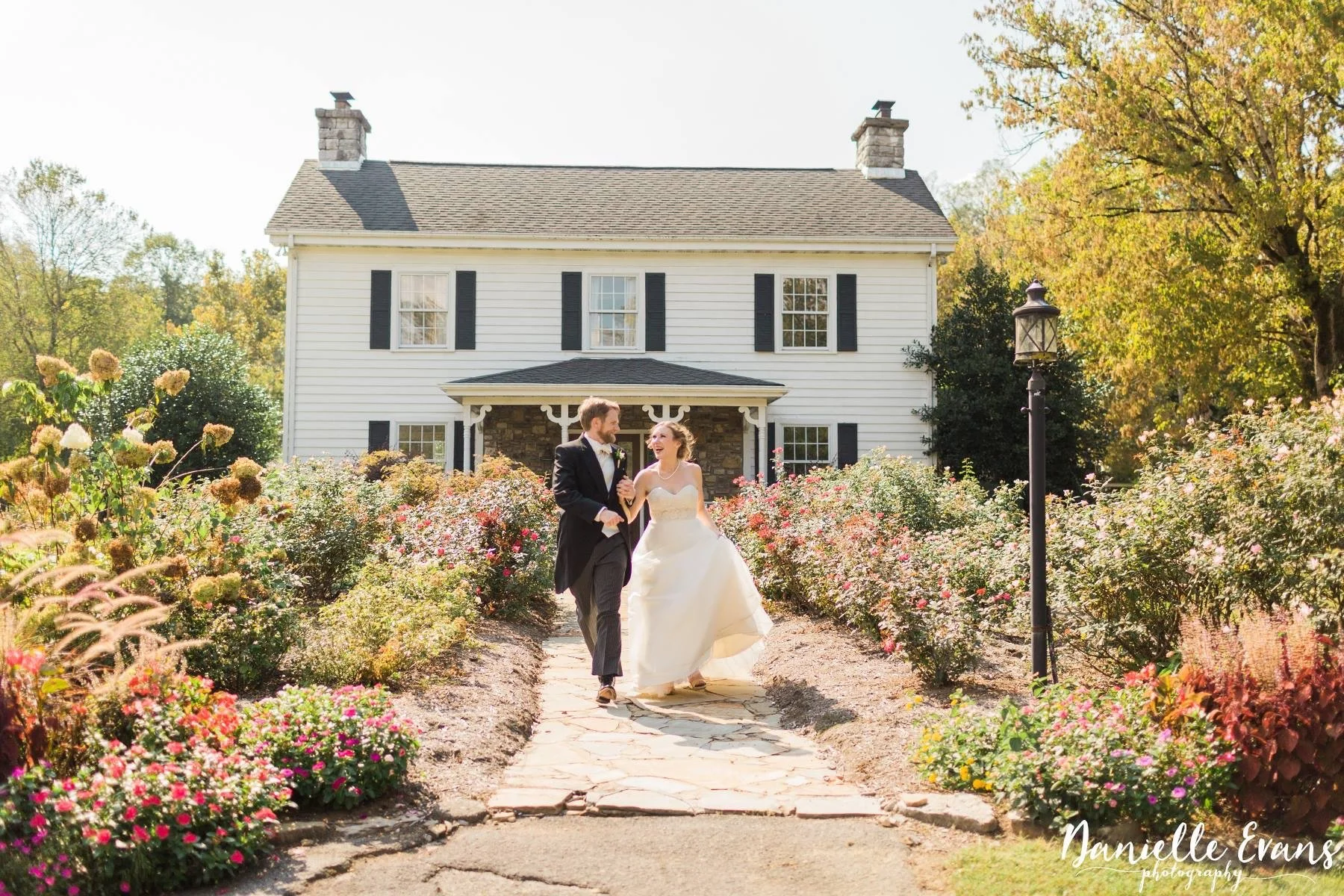
Wedding Day- First Day of Fall. Special Thanks to Danielle Evans Photography at Dara’s Garden in Knoxville, TN
Curveball Three: My foot.
I got back into training, but I couldn’t run more than five miles without bunion pain.
Eventually, I chose to have a bunionectomy so I could run longer distances and hopefully prevent worsening pain as I aged. The orthopedic surgeon knew I wanted to complete an Ironman someday, so we chose a procedure with that goal in mind.
Curveball Four: Complex Regional Pain Syndrome.
My nerves began overreacting to stimuli of the bunionectomy and firing pain signals.
At first, it felt like I was being stung by a bee every 30 seconds, and this gradually progressed to feeling stung every 5-15 minutes.
My orthopedic surgeon strongly insisted I see a pain clinic and under undergo at least three spinal injections. I followed her guideance.
I had amazing care from the pain clinic. Thankfully, the worst of of the nerve pain mostly resolved after the first injection. After the third injection, the nerve pain was gone. The muscle pain was still there to work through with physical therapy.
Curveball Five: Chronic pain.
My recovery didn’t go as planned. My physical therapy was delayed due to the Complex Regional Pain Syndrome.
I went through months of physical therapy.
I eventually returned to running, but not like before. I lived with chronic foot pain for three years after the bunionectomy.
Fast forward- years later, I tried a mechanical foot massager off of Amazon.
This surprisingly helped break up the scar tissue and relieved the chronic pain.
And finally, the chronic pain was resolved.
After three years, I was free. Free of pain.
Curveball Six: Carlisle Perrin passes away
I had an extremely close relationship to my mother-in-law. I called her mom. I’m extraordinarily blessed to have a very close relationship with my in-law family.
Carlisle went into the hospital after Christmas, and she passed away on New Years Eve Day. She had a kidney stone along with a UTI. What should have been routine turned into a battle with sepsis.
I lost my mom that day.
I took her loss very hard.
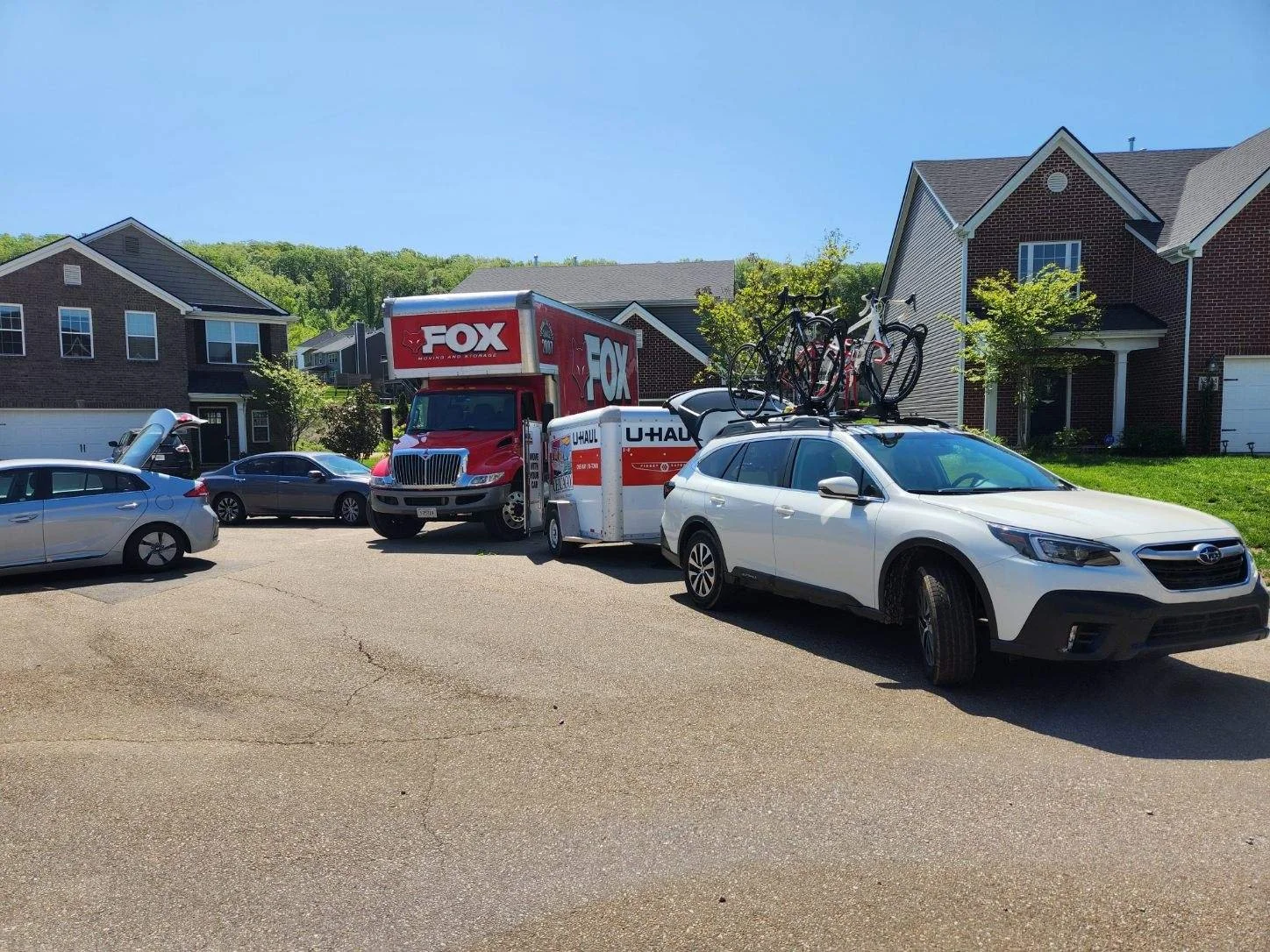
Moving Day! First time moving out of state for me. Felt like a tornado.
Curveball Seven: We’re moving!
Moving to Greenville was my first time moving to a new city as an adult. I had lived in Knoxville, Tennessee for twenty two years.
We moved, got settled, made new friends, and built new routines.
It was a positive move for both of us. Along with a healthy reset that helped us realign our time.
Eventually, life started clicking.
We both got into training routines.
I completed my first half marathon after my bunionectomy. That was a goal that, years earlier, I wasn’t sure would ever happen again.
Camden and I started working with a coach. He was crushing his sport and beginning to rise through the ranks.
I was going farther, and slowly getting faster.
My A-priority race that year was the State Championship at Clemson Triathlon.
I surprisingly finished third in my age group. It was my second ever open water swim, and my first open water race.
And I qualified for USA Triathlon Age Group Nationals.
USAT AG Nationals?!
Me?!
I’m the slow kid from gym class who could barely run a mile.
Me?!
Seriously?!
But I wanted to go.
So I did.
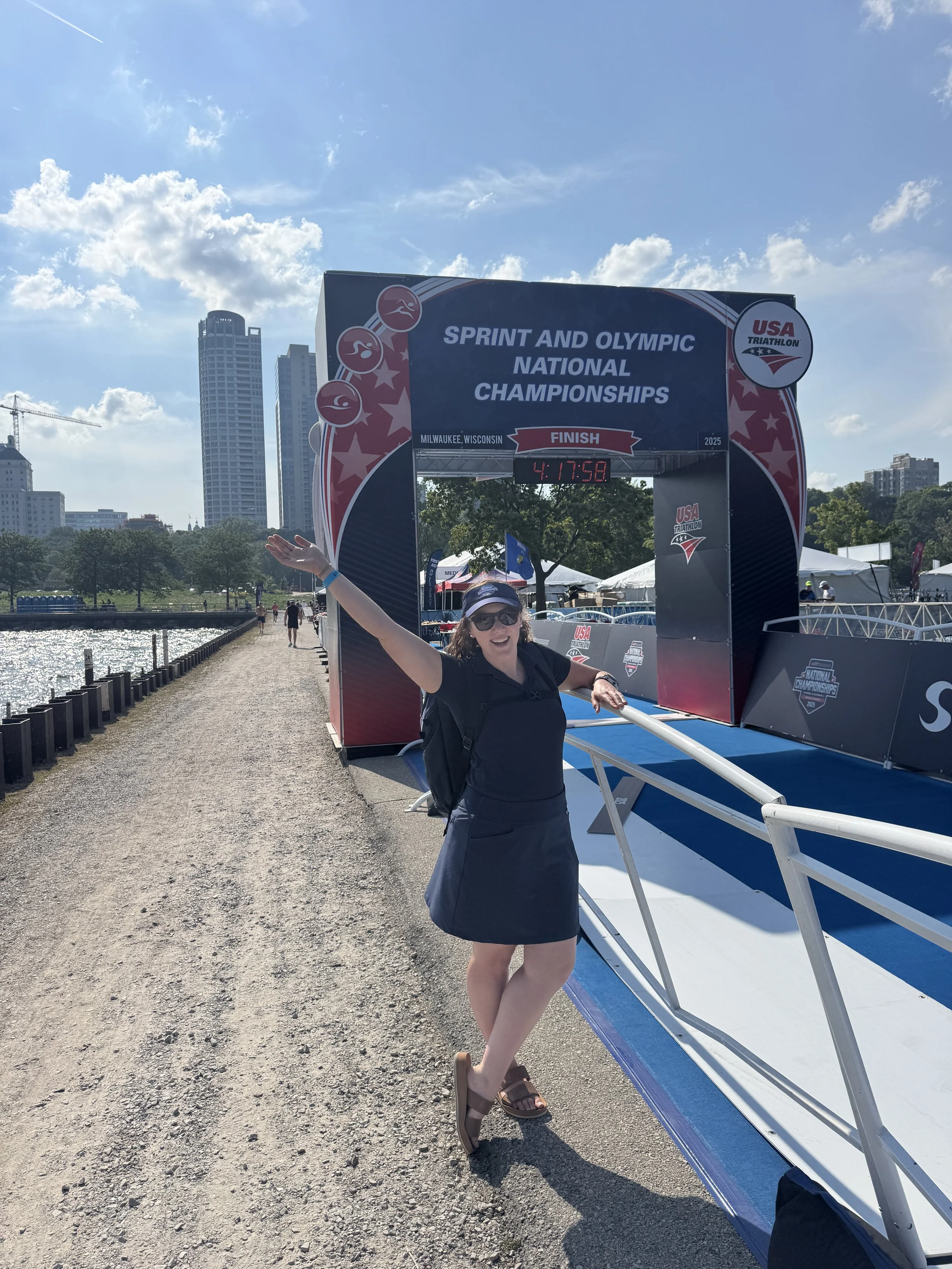
I went to USA Triathlon Age Group Nationals in Milwaukee, Wisconsin.
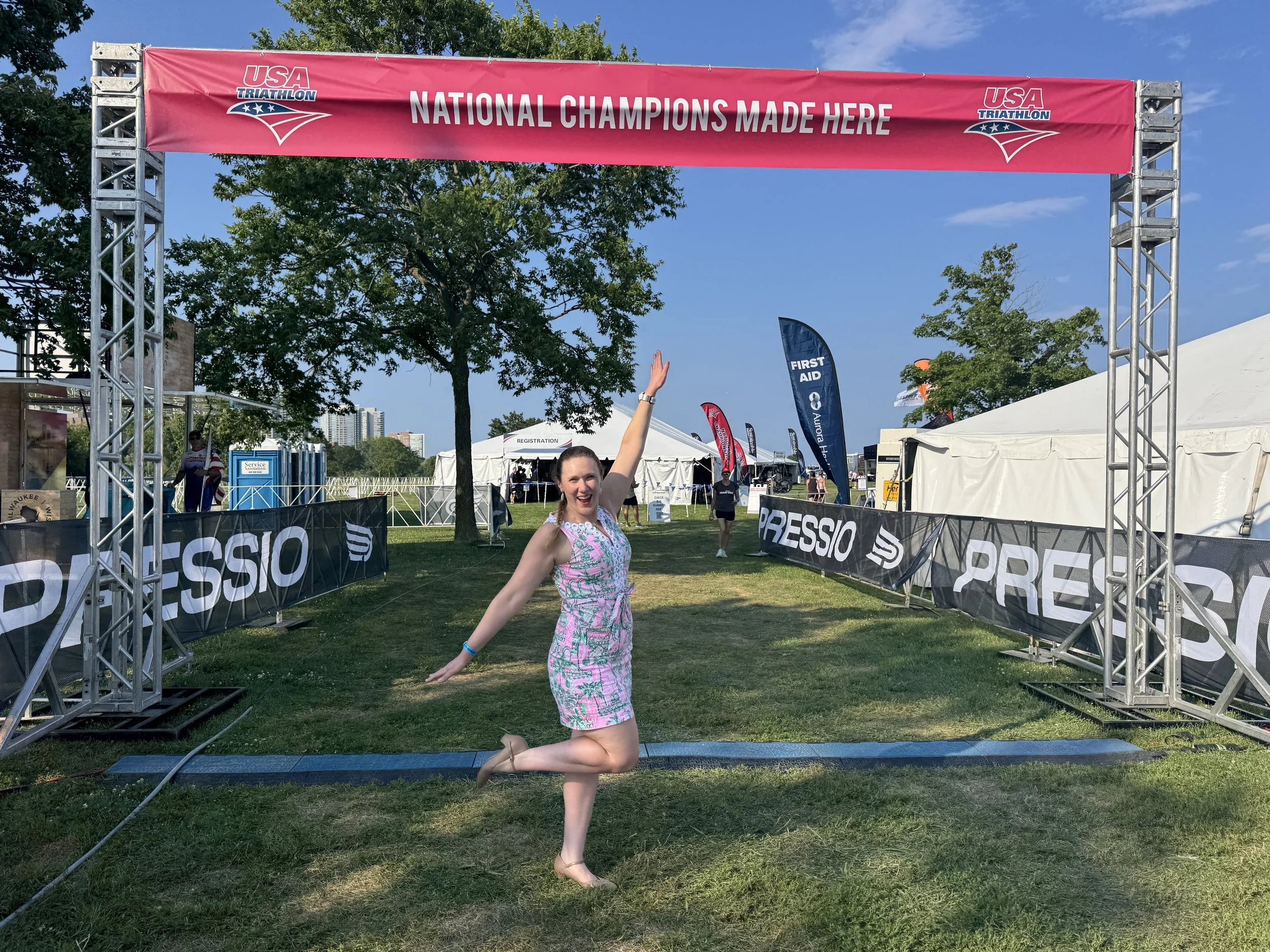
USAT AG Nationals 2025
I qualified for both, but I signed up for only the sprint. I wanted to give all my energy to one short race.
By this point, I knew I had REDs.
I was at peace that AG Nationals was going to be my final race before buckling down, resetting, and working through REDs. I had a plan.
I wasn’t there expecting a podium.
I was there to celebrate how far I had come and expose myself to a higher-level race to help “future me”.
“Future me” sees a higher-level race as a fun way to challenge myself, and I wanted to expose myself to that type of environment without pressure to perform.
And somehow, this was FINALLY the moment I couldn’t deny it anymore.
I was standing at USAT Age Group Nationals event.
I finally saw myself as an athlete.
It shouldn’t have taken a National level event for me to feel like a “real” athlete, but it did.
Race morning came.
I got transition ready. I was excited. Ready to race.
Rain the night before had kept me awake wrestling with the demons in my head, but I bravely showed up anyway.
We walked into transition getting ready to race, then everyone’s phones started buzzing with a notification from the USAT app.
RACE CANCELED.
I stood there in disbelief.
I genuinely felt like I was being punked.
This was supposed to be the moment.
The debut race where I finally saw myself as an athlete.
I showed up knowing I could finish last in my age group, and it would be okay. I knew I wasn’t my best that day, but I felt okay to race.
I simply wanted to finish.
But the race really was canceled.
I packed up my things.
We flew home.
And I reminded myself:
I showed up. This became my new anthem.
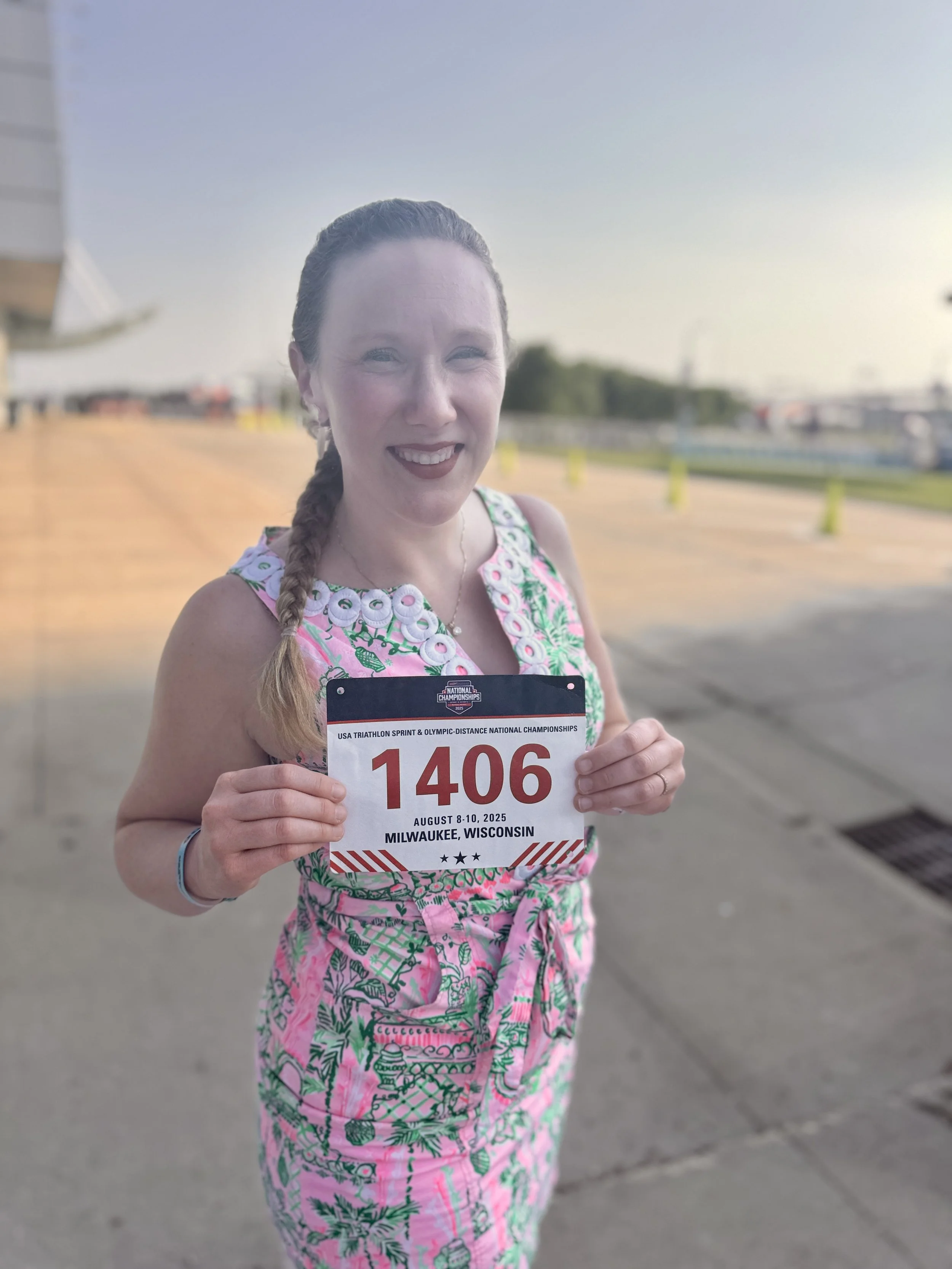
USAT AG Nationals 2025
After AG Nationals, I started working with a Certified Sports Dietitian along with a new to me triathlon coach to fully to commit to working through REDs.
Before starting, I thought REDs recovery would be a one or two month process. I anticipated a lot of changes.
Reduce training.
Eat more carbs.
Recover.
Easy enough.
I followed the guidance and increased my carbs.
LIGHTBULB.
I felt amazing at first.
WOW.
It was like someone flipped a light switch and turned my energy back on. I hadn’t felt that alive in a long time. It was honestly life changing for me.
And then, slowly, I started feeling worse.
And worse.
It was incredibly confusing.
The more I rested, the worse I felt.
My case continued to evolve and become more complicated.
I started working with a sports physiologist and shared everything that was happening.
Her advice for my case?
This is Severe REDs.
Full Stop with training. Active Recovery only (such as walking or yoga).
She told me up front that recovering from Severe REDs could take a full year.
A YEAR?!
Curveball Eight: It wasn’t just REDs. It was SEVERE REDs.
I was “overweight” and the scale over the past six months showed that I was GAINING weight.
How?! How can I have Severe REDs AND be overweight AND gaining weight?
Answer: Multiple converging factors, but the major contributor was that I wanted to lose weight as an endurance athlete thinking it would help me be more competitive without the assistance of a certified sport dietitian. I followed incorrect macros that wasn’t right for my body. That path led me down Severe REDs.
How could I miss this?
Continuous Birth Control since middle school. I haven’t a period in 20+ years. Continuous birth control masks the body signal of a healthy menstrual cycle for athletes.
I could have corrected course sooner, if I knew earlier.
Full Stop. Active recovery only.
It suddenly felt like everything I had worked so hard for shattered in a moment.
I knew what active recovery meant.
Another hard climb back to the fitness I had fought so hard to build.
I had already registered for races in 2026. Their fate was suddenly unknown.
The sports physiologist recommended working with my triathlon coach to decide how to navigate what came next.
I made myself a promise:
Whatever my triathlon coach recommended, I would fully commit even if I hated the answer.
As a highly motivated athlete, the LAST thing I wanted to hear was her agreement with the idea of stop training and active recovery only.
My coach agreed with my sports physiologist.
And she taught me something incredibly simple and valuable:
Health comes first.
So we pushed pause.
I thought I understood what that meant.
I didn’t.
My mind wasn’t ready for the reality that came next.
Continued in Part 3. Coming soon: Tuesday, Sept 1.
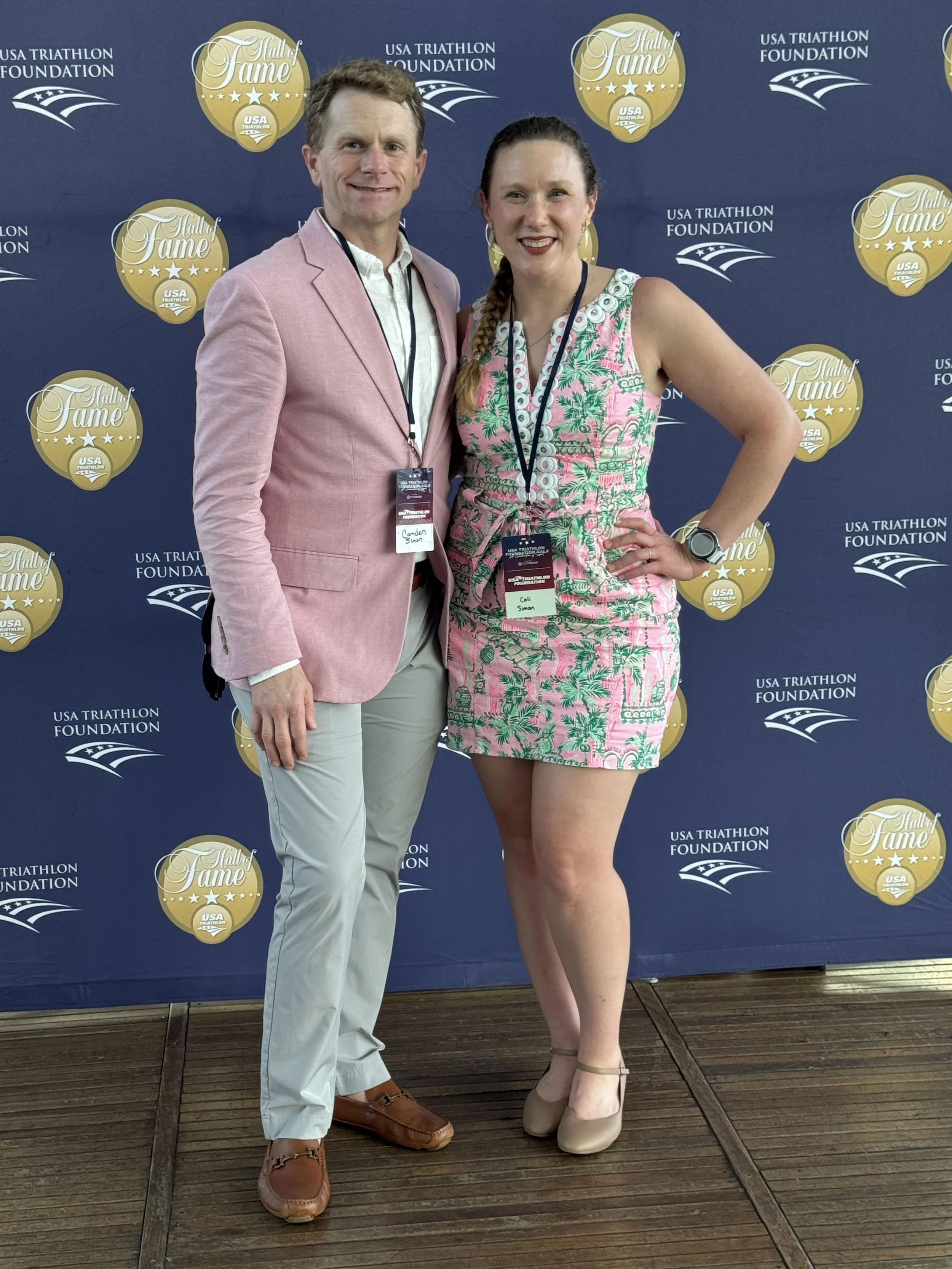
USAT AG Nationals 2025
